

Being a beginner, when you decide to pursue massage therapy as your full-time career path, the first and most important thing is to find a school that will provide a solid foundation. But the thing is, every program you see around will not suit your goals, your timeline, or your idea of what you want to be; like becoming a chiropractor, having your own clinical setting, or going to a sports facility. To make your dreams true, we have put together this guide with the most important things you need to know before choosing a massage therapy school. Come, read it!
Guide: All About the Right Massage Therapy SchoolWhen you are choosing the right massage therapy school, it comes down to checking out the curriculum depth, hands-on training hours, instructor experience, and career alignment. A well-rounded program with real-client practice and strong exam preparation ensures you’re fully ready to enter the field. Your right decision will build a solid foundation for success as a professional massage therapist. |
Why the Right Massage School Matters for Your Career?
It Builds a Strong Professional Foundation
Receiving proper training from a massage therapy school helps build a strong foundation in technique, clinical thinking, and client communication from the very beginning. The quality of your education can play a major role in shaping your long-term success, which is why choosing a program that prioritizes hands-on learning and professional development is so important.
Your Career Specialization Will Start in School
The modalities and specialties your program covers, like deep tissue to prenatal massage, determines which career paths are open to you from day one. For example, a student trained in deep-tissue, sports, and prenatal massage can apply for far more job opportunities than someone trained only in basic relaxation techniques. Therefore, the broader and more clinical your training is, the more marketable you become as a professional.
It Affects Your Readiness for the State Exam
Anyone who’s a graduate from a San Antonio massage therapy school is required to pass a recognized competency exam before practicing. Therefore, when you’ve chosen the right curriculum, such as anatomy, physiology, and pathology, it helps ensure you’re fully prepared to pass the state exam and begin practicing professionally.
Key Factors to Consider When Choosing a School
Total Training Hours, Program Schedule & Flexibility
In Texas, completing at least 500 hours of coursework at a state-approved massage school is required before you can apply for your license. But many programs go beyond this, so you need to consider the schedule as well. Full-time programs typically wrap up in around 7 months, while part-time options can extend to 2 years. There is also a provision of evening and weekend classes provided by some schools.
| Industry Insight: Employment of massage therapists is projected to grow 15% from 2024 to 2034, much faster than the average for all occupations. It will also lead to approximately 24,700 job openings each year over the next decade. |
Quality and Experience of Instructors
It is obvious that you need to pay close attention to who is going to teach you. Whoever is there must currently be permitted as a massage therapist in the state and must have at least 1 year of active practice with a minimum of 500 hours of hands-on experience. This means every qualified instructor has real clinical experience and is not just an expert in classroom theory.
Alignment with Your Career Goals
You need to think about where you want to work: a spa, a clinical setting, a sports facility, a hospital, a private practice, or somewhere other. This is because different settings require different skill sets. That’s why you should choose a school whose program matches the environment you want to enter in the future.
Tuition, Financial Aid, and Total Cost of Attendance
The program’s cost in schools of massage therapy varies widely, and tuition is only part of the picture. So, consider equipment fees, textbooks, supplies, and exam prep costs. Also, research what financial aid or payment plan options the school offers. A program that’s slightly more expensive but better equipped can be worth it, but go in with eyes open on the true total investment.
Internship Structure and Real-Client Hours
Schools in Texas are required to provide students with a minimum of 40 hours of hands-on massage therapy experience. Also, the students cannot begin internship hours until they have successfully completed at least 250 hours of supervised course instruction. So when evaluating a school, you need to ask how many internship hours they offer other than the state minimum, how clients are sourced, and whether an instructor will be physically present during every session.
What Can Hold Your Career Back?
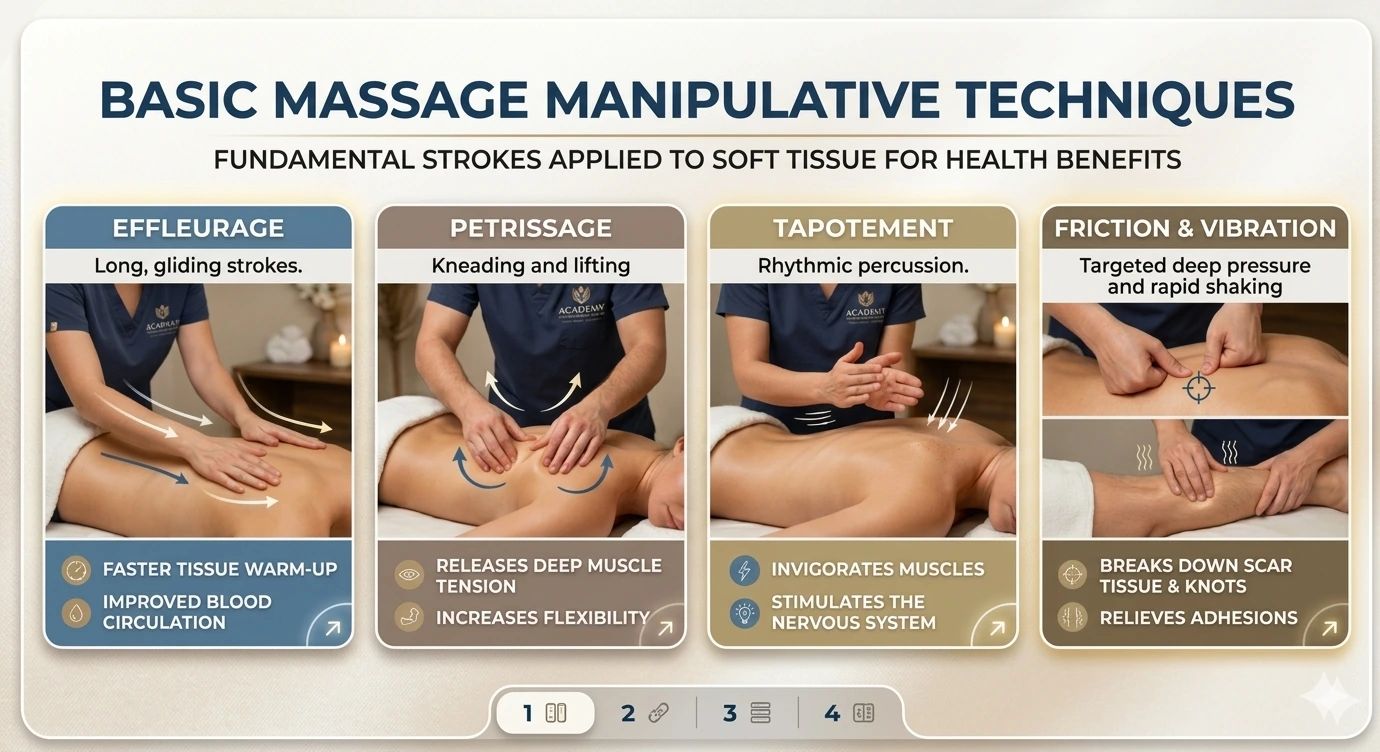
To help you avoid costly mistakes and make a confident decision, here are some critical warning signs you should never overlook when selecting a massage therapy school in San Antonio:
Conclusion
You need to take your time properly and trust the program that genuinely prepares you for the work, not just the diploma. Because choosing a right massage therapy school is going to be the most career-defining decision you’ll ever make. So, when you have checked all the factors, make sure you reach out to the Academy for Massage Therapy Training. We provide in-field programs such as fundamentals, massage mastery, and advanced clinical mastery. These are taught by instructors with over years of combined experience!
Your future clients are waiting, come let’s get started! Get in touch today.
FAQs
Q1. If I want to practice massage therapy, which exams do I need to pass?
You need to pass the Massage & Bodywork Licensing Examination, administered by the Federation of State Massage Therapy Boards. It is what most states require from you.
Q2. How fast after graduating can I start working as a massage therapist?
You can easily start working when you pass your state exam and meet local requirements. Many even start within weeks of finishing their program.
Q3. Do massage therapists need to know how to run a business?
Many programs include business basics, like how to manage clients, ethics, and scheduling. It becomes important if you want to open a private practice.
Q4. Is there any age restriction for enrolling in a massage therapy program?
You need to be at least 18 years old. Some schools may accept 17-year-olds, but with parental consent.
Q5. Can I transfer my massage therapy credentials if I move to another state?
Requirements may vary by state. Some states have reciprocity agreements; others require you to meet their specific training or exam standards independently.