
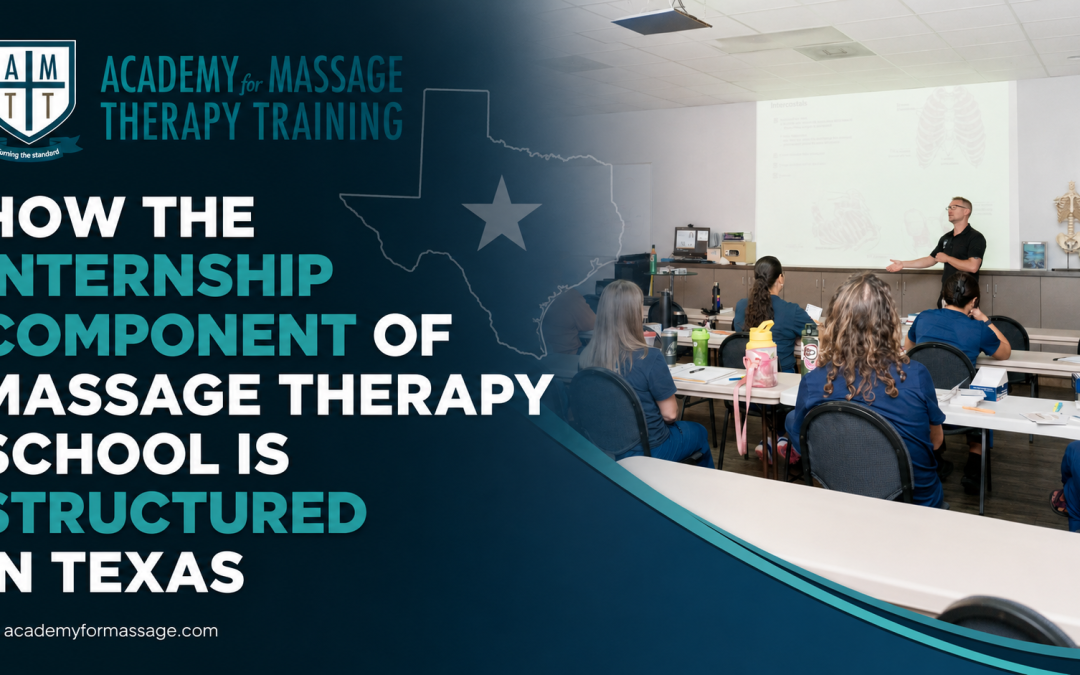
If you’re weighing your options among massage therapy schools, you’ve probably already read about class hours, anatomy units, and licensing exams. But there’s one part of massage therapy school that decides more than anything else whether you’ll graduate with the steady, confident hands of a true professional or just a certificate: the internship. At the Academy for Massage Therapy Training (AMTT), we treat this stage as where proficiency is actually built, not where a state requirement gets checked off.
Concise Overview of Texas Massage InternshipsTexas massage therapy programs require a 500-hour curriculum, including at least 40 supervised internship hours completed after foundational classroom and technique training. Internships must be in person under licensed instructor supervision, giving students real-client experience with intake, communication, documentation, and varied techniques such as Swedish and deep tissue massage. AMTT provides 50 or more internship hours, emphasizing repetition, close feedback, clinical variety, and career-ready confidence beyond state minimum licensing requirements. |
Why Skilled Hands Matter More Than a Diploma
Anyone can memorize muscle names and technique steps in a classroom. What separates a genuinely proficient massage therapist from someone who simply passed their courses is repetition under real conditions, on real bodies, with real feedback from an expert in the room. This is exactly what the internship inside massage therapy school is designed to build, and it’s the single biggest predictor of whether a graduate walks into their first job with confident, capable hands or with hesitation clients can feel. There are several schools for massage therapy in Texas to consider, but the internship structure is what varies most between programs.
The Internship: Where Massage Therapy School Becomes Professional Practice
An internship is the supervised, hands-on portion of massage therapy school where students move from practicing on classmates to working with real clients. Texas law requires a minimum of 40 hours of this hands-on experience as part of the 500-hour licensure curriculum, but the number of hours only tells part of the story. [1] What matters is whether those hours are spent building genuine skill under expert guidance, which is why AMTT structures 50 or more internship hours into its program, giving students meaningfully more repetition than the state’s bare floor requires.
How Texas Ensures Every Graduate Meets a Professional Standard
Texas Occupations Code Section 455.159 sets a clear bar: students must complete at least 250 hours of supervised classroom and technique instruction, including 100 hours specifically in massage therapy techniques and theory, before they’re even eligible to begin their internship. [2] The internship itself must take place in person, on school grounds or in a clinic, with a licensed instructor physically present, never through distance learning. This isn’t bureaucracy for its own sake; it’s the state’s way of ensuring every licensed therapist has earned genuine, hands-on competence before working independently. It’s worth understanding this if you’re comparing schools for massage therapy, since not every program builds in the same level of supervised rigor.
Inside an AMTT Internship: Building the Hands of a Skilled Therapist

During internship hours, students work in a supervised student clinic, performing full massage sessions on real clients while an instructor actively observes technique and client communication. This includes intake conversations, adapting to client comfort and health history, and documenting sessions professionally. It’s the stage where technique stops being memorized and becomes instinct, the kind clients notice and trust.
Talk to an AMTT advisor about how our internship hours compare to the state minimum, and what that difference means for your confidence on day one.
The Clinical Hours Behind a Confident, Capable Massage Therapist
Texas requires a minimum of 40 hands-on internship hours, per state statute and Texas Department of Licensing and Regulation (TDLR) guidance. [3] But more hours under expert supervision generally means a more capable, more confident therapist on day one of independent practice. If a school you’re considering offers little beyond that bare legal minimum, it’s worth asking how much real proficiency their graduates actually leave with. This is one of the clearest ways to judge schools for massage therapy in Texas beyond marketing claims.
The Range of Techniques That Shape a Well-Rounded Professional
Internship experience isn’t limited to one technique. Students typically rotate through Swedish massage, deep tissue work, and modalities tied to hydrotherapy and therapeutic bodywork, since these are core components of the 500-hour curriculum. This breadth matters because clients need a therapist who can adapt to different conditions, and a well-rounded internship is what turns a student into a therapist capable of meeting that range of real demand with genuine skill.
Expert Supervision: The Difference Between Practicing and Mastering a Skill
Every internship hour in a Texas-approved massage therapy school happens under the direct supervision of a licensed instructor. This isn’t a loose mentorship model; it’s a structured safeguard that protects clients while sharpening a student’s judgment in real time. At AMTT, instructors stay closely involved throughout each session, correcting technique and building precision before a small habit becomes a lasting weakness in a student’s future practice.
From Intern to Professional: How This Stage Builds Career-Ready Skills
Graduates who complete a thorough internship walk into their first job with the kind of muscle memory and calm competence that classroom hours alone can’t build. It’s the difference between knowing what a contraindication is on paper and recognizing one instantly mid-session. This is why employers, and increasingly clients, ask where a therapist trained and how much real internship exposure shaped their skill. Many people searching for massage therapy schools are really asking this same underlying question, just phrased as a search for the right program.
What Sets Apart a School That Produces Genuinely Skilled Therapists
When comparing massage therapy programs, don’t just compare the internship hour count. Ask how many hours beyond the state’s 40-hour minimum the program offers, how closely instructors supervise sessions, and whether students train across a genuine variety of client needs. A rushed or thinly supervised internship can leave someone licensed but underprepared, and that gap in proficiency tends to surface fastest in a therapist’s first few months of real client work.
Choosing the right training program in Texas is a big decision, and it’s normal to want reassurance you’re picking one that builds real expertise.
Talk to an AMTT advisor today, and we’ll walk you through exactly how our internship hours, supervision, and clinical variety compare to other programs, so you can enroll with confidence instead of guesswork.
Frequently Asked Questions
How many internship hours does Texas require for massage therapy school?
Texas law requires a minimum of 40 hands-on internship hours as part of the 500-hour massage therapy education required for licensure.
Can I complete my massage therapy school internship online?
No. Texas rules require internship hours to be completed in person on school grounds or in a clinic setting, with an instructor physically present.
When can I start my internship during massage therapy school?
You must complete at least 250 hours of supervised classroom instruction, including 100 hours of massage therapy techniques and theory, before beginning your internship.
Does more internship experience really make a more skilled therapist?
Generally, yes. More supervised, hands-on hours under expert instruction typically translate into greater confidence and technical precision once a therapist is working independently.
Sources
[1] Texas Administrative Code, Justia — Massage School Curriculum Outline and Internship
[2] Texas Occupations Code, Justia — Section 455.159: Student Internship Program
[3] Texas Department of Licensing and Regulation — Massage Therapy at a Glance