

Long hours of sitting, poorly arranged workstations, and limited movement in modern office work often lead to poor posture, muscle tension, and reduced physical fitness. Over time, these issues can result in chronic pain, fatigue, and decreased productivity.
For office workers, prioritizing physical well-being is essential to prevent long-term strain and maintain consistent performance. Wellness massage provides targeted relief by easing muscle tension, improving circulation, enhancing flexibility, and supporting proper alignment. Relieving the physical stress caused by prolonged sitting and repetitive tasks, it allows the body to feel more aligned, relaxed, and restored. In this blog, we’ll discuss how it helps improve posture, build physical resilience, and stay comfortable in demanding office environments.
Overview of Wellness Massage BenefitsWellness massage supports posture, mobility, and physical performance by reducing muscle tension, improving circulation, and enhancing recovery. Prolonged sitting and repetitive strain can create imbalances that affect long-term musculoskeletal health. Recognizing early signs of stiffness and restricted movement allows timely intervention, helping maintain flexibility, structural alignment, and overall physical resilience in demanding daily routines. |
Understanding the Benefits of Body Wellness Massage for Physical Fitness
Myofascial Integrity and Soft Tissue Extensibility
The musculoskeletal system relies heavily on the functional integrity of fascia, a dense connective tissue network composed primarily of collagen and elastin fibers. Sedentary behavior and repetitive loading patterns contribute to fascial densification, reduced viscoelasticity, and the formation of myofascial adhesions. These restrictions impair force transmission between muscle groups and limit the functional range of motion.
Body wellness massage techniques such as myofascial release, cross-fiber friction, and sustained deep-tissue compression stimulate mechanoreceptors within the fascia, promoting tissue rehydration and remodeling of collagen fibers. For individuals seeking a full body massage in San Antonio, these techniques are applied systematically to restore fascial glide and improve extensibility.
Hemodynamic Circulation and Lymphatic Flow
Effective physical fitness relies on optimal hemodynamics and metabolic exchange. Manual manipulation during massage induces vasodilation through mechanical stimulation of endothelial cells, which improves microcirculation within skeletal muscle tissue. Increased perfusion enhances oxygen delivery and adenosine triphosphate (ATP) production at the cellular level.
Simultaneously, massage facilitates lymphatic drainage by stimulating superficial lymph vessels, accelerating the clearance of interstitial fluid, inflammatory mediators, and metabolic byproducts such as lactate. This reduces delayed-onset muscle soreness (DOMS) and improves recovery kinetics following physical exertion, benefits commonly experienced during a structured San Antonio full-body massage session.
Neuromuscular Activity and Muscle Tone
Muscle function is regulated by neuromuscular signaling involving muscle spindles, Golgi tendon organs, and motor neuron activation. Chronic postural strain often results in hypertonicity, altered proprioceptive feedback, and dysfunctional motor recruitment patterns.
Body wellness massage influences the autonomic nervous system by shifting dominance from sympathetic activation toward parasympathetic response. This reduces excessive alpha motor neuron firing, decreases involuntary muscle guarding, and improves neuromuscular synchronization. The result is more efficient muscle activation, improved motor control, and enhanced functional strength output.
Arthrokinematics and Joint Biomechanics
Joint performance depends not only on structural integrity but also on surrounding soft tissue mobility. Myofascial tightness and muscular shortening can alter arthrokinematics, the subtle rolling and gliding motions within joints, leading to compensatory movement patterns and increased mechanical stress.
Through targeted manipulation, massage reduces periarticular soft tissue restriction and improves capsular mobility. This enhances joint congruency, optimizes load distribution, and supports biomechanical alignment during dynamic movement. Improved joint mechanics contribute to better stability, coordination, and long-term musculoskeletal resilience.
Endocrine and Stress-Response Mechanisms
Chronic occupational stress elevates cortisol and catecholamine levels, which can promote protein catabolism, impair muscle repair, and delay recovery. Clinical evidence indicates that therapeutic massage reduces circulating cortisol while increasing serotonin and dopamine concentrations.
This hormonal modulation supports anabolic processes and creates a physiological environment conducive to muscular repair and adaptation, key factors in maintaining physical fitness over time.
Tissue Repair and Adaptation Cycles
Physical adaptation occurs during the recovery phase through processes such as satellite cell activation, protein synthesis, and collagen remodeling. A professional massage service enhances local circulation and reduces pro-inflammatory cytokine activity, creating favorable conditions for tissue regeneration.
By decreasing muscle stiffness, improving mitochondrial efficiency, and promoting neuromuscular relaxation, body wellness massage shortens recovery intervals and allows for more consistent training or physical activity engagement.
When does your body need a wellness massage?
Your body gives early physical signals when muscle strain, poor circulation, or postural stress begins affecting normal function. Recognizing these indicators helps prevent chronic discomfort and mobility limitations.
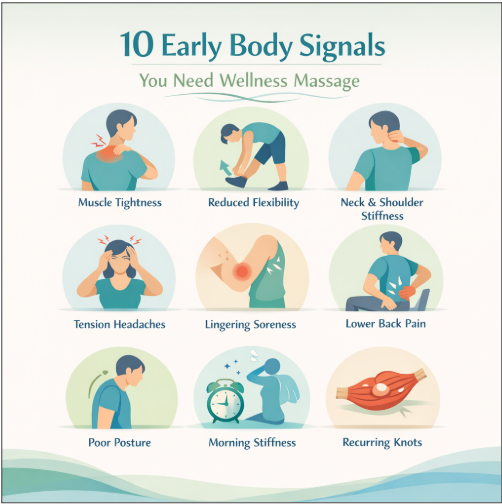
- Persistent muscle tightness lasting several days often signals reduced blood flow and accumulated tension within the tissue.
- Difficulty turning the neck, raising the arms, or bending comfortably may indicate restricted soft tissue and reduced joint mobility.
- Regular neck and shoulder stiffness after long desk hours suggests sustained muscular overload and postural strain.
- Frequent tension headaches are commonly linked to tight upper back and cervical muscles compressing surrounding nerves.
- Prolonged soreness after mild exercise can point to inefficient circulation and slower metabolic waste removal.
- Ongoing lower back discomfort from sitting reflects increased lumbar pressure and weak core muscle engagement.
- Noticeable posture changes, such as rounded shoulders or a forward head position, indicate a developing muscular imbalance.
- Waking up with body stiffness despite adequate sleep may mean the nervous system is not fully relaxing during rest.
- Recurrent muscle knots in the same areas suggest chronic overuse and localized tissue restriction.
- Constant physical fatigue without intense activity can result from sustained muscular tension affecting energy efficiency.
Conclusion
If you are searching for an affordable massage near you without compromising professional standards, the Academy for Massage Therapy Training offers full-body wellness massage therapy designed to relieve accumulated stress. Our sessions are delivered by highly trained practitioners, ensuring safe, evidence-informed techniques in a calm and restorative environment. With flexible 30, 60, 90, and 120-minute sessions and light-to-moderate pressure suited for stress reduction and whole-body relaxation, the services are ideal for office workers managing daily physical strain. Prioritizing regular wellness care today with us.
FAQs
Q1. What type of pressure is used during a wellness massage session?
Our wellness massages use light-to-moderate pressure designed to promote relaxation and overall muscle relief. This pressure level supports stress reduction and circulation without causing discomfort, making it suitable for most clients.
Q2. How do I choose the right session duration for my needs?
Shorter 30-minute sessions work well for general relaxation or limited schedules, while 60–120-minute sessions allow for more comprehensive full-body work. Your choice depends on your time availability and the level of tension you want addressed.
Q3. What should I expect during my first wellness massage appointment?
You can expect a brief intake discussion, a calm treatment setting, and a professionally guided session tailored to relaxation and stress relief. Student therapists follow structured protocols to ensure consistency and client comfort.
Q4. Are wellness massage sessions suitable for beginners?
Yes. Our wellness massage is beginner-friendly and ideal for individuals new to massage therapy. The lighter pressure approach provides a comfortable introduction without intense or deep muscle manipulation.
Q5. Do you offer more targeted massage options if needed?
In addition to full body wellness massage, we also offer deep tissue massage for clients seeking more focused muscle relief. This option is appropriate for those experiencing localized tightness or chronic muscle tension.