
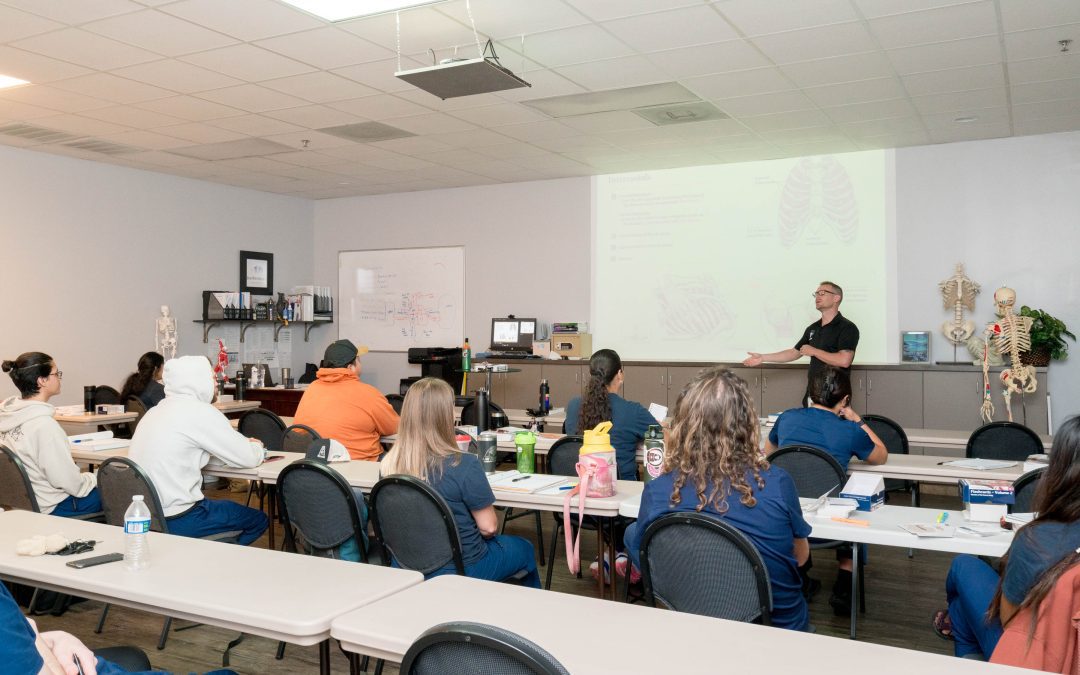
If you’re confused trying to figure out intense science lectures and demanding hands-on massage training, don’t worry, you aren’t alone. Lecture hours are your desk-based classroom learning where you master a theory. While lab hours are your hands-on physical practice where you learn the techniques with peers and actual clients at a student clinic.
Now, the real problem here lies in ignoring how training hours in massage school are split, because without the right balance, you risk physical exhaustion and feeling totally unprepared for exams or real clients. So, read this guide to understand these key differences and get an easy head start on your massage career.
Complete Overview of Lecture and Lab HoursThe best schools for massage divide your time between lecture and lab hours to ensure total professional competency. Lecture hours build your mental foundation, focusing on written exams and topics like anatomy, pathology, ethics, and business. Conversely, lab hours develop your physical skills through active, hands-on practice in massage techniques, hydrotherapy, and clinical internships. Balancing both areas prevents physical burnout, develops critical thinking, and prepares you to pass licensing tests. |
Key Differences Between Lecture Hours and Lab Hours
Lecture hours
The lecture hours are the intellectual backbone of your entire massage career. These are classroom-based learning sessions focused on theoretical, scientific, ethical, and medical massage therapy education.
Lab Hours
These sessions are supervised, hands-on training sessions made to develop hands-on skills, therapist confidence, body mechanics, and client communication skills. Moreover, lab hours specifically focus on applying massage knowledge through physical practice and repetition.
Massage Training: Lecture vs. Lab Hours
| Aspects | Lecture hours | Lab Hours |
| Main Purpose | To understand body systems, professional ethics, and safety rules. | To build real-world confidence, touch sensitivity, and practical skills. |
| Learning Method | Studying textbooks, listening to teachers, taking notes, and discussing concepts. | Watching live demonstrations and practicing movements on real people. |
| Focus Area | Mastering the scientific and medical “why” behind bodywork. | Master the practical and physical “how” of performing treatments. |
| Career Preparation Role | Helps students prepare for written licensing examinations effectively. | Helps students prepare for real clinical massage environments. |
| Training | Minimal physical activity during academic learning sessions. | Requires active physical participation and repetitive practical movements. |
How are Hours divided on a Category basis?
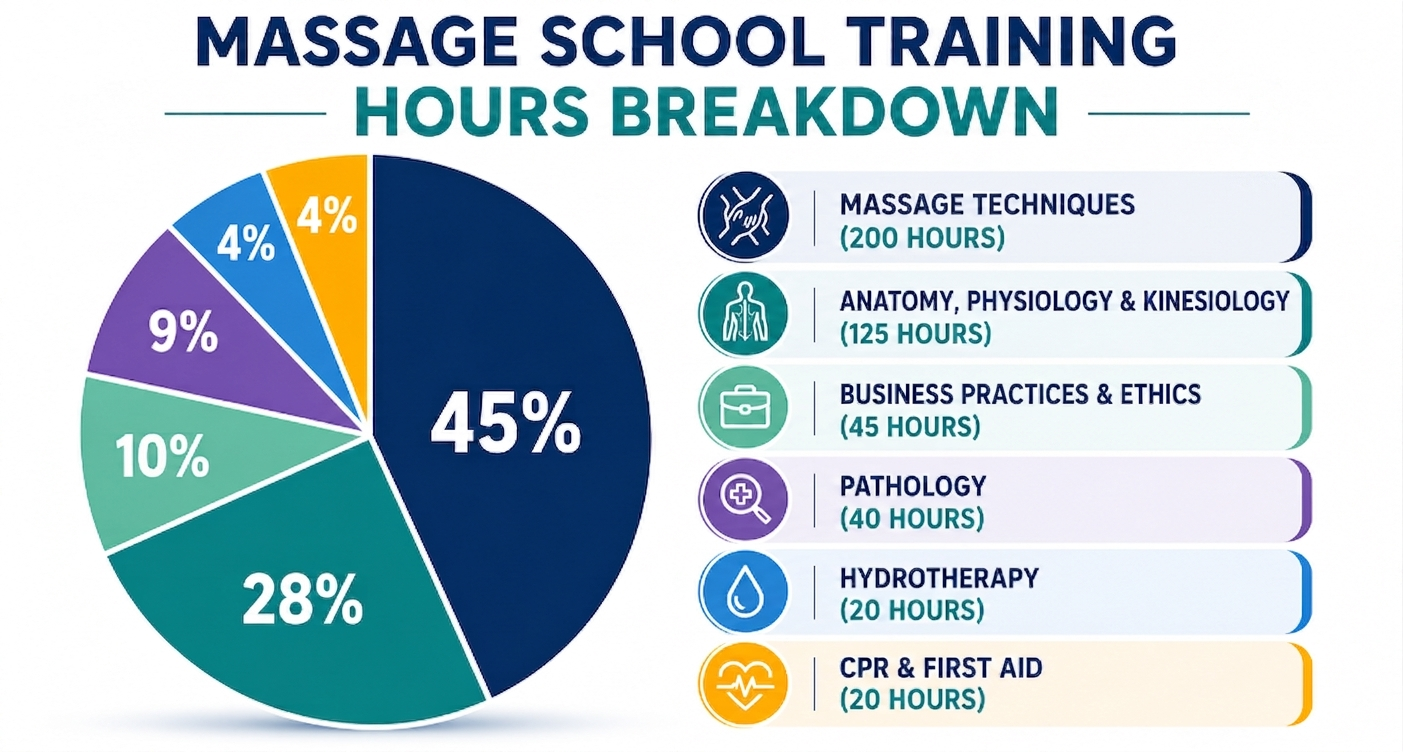
Massage Technique – 200 Lab Hours
As one of the most practice-intensive parts of massage school, massage technique training is primarily taught through lab hours. It teaches students how to manipulate soft tissues, muscles, tendons, and connective tissues using specific hand movements and therapeutic methods. These techniques are designed to improve circulation, reduce muscle tension, relieve pain, promote relaxation, and support overall physical wellness.
Health & Hygiene, CPR & First Aid – 20 Lecture Hours
The 20-hour health and hygiene, CPR & first aid session is mainly lecture-based training. During these lecture hours, students learn proper sanitation procedures such as disinfecting massage tables, washing hands correctly, sterilizing tools, changing linens safely, and preventing cross-contamination between clients. This session teaches the students to recognize medical emergencies such as fainting, breathing difficulties, allergic reactions, cardiac arrest, muscle injuries, or sudden health complications during massage sessions.
Anatomy, Physiology & Kinesiology – 125 Lecture Hours
These are among the most important lecture-based hours in massage school. During these 125 lecture hours, students study muscular structures, skeletal systems, organ functions, circulation, nervous system responses, and muscle origin and insertion points. While anatomy focuses on the physical structure of the body, physiology tells how body systems function internally. Moreover, lectures on kinesiology are needed to understand body movement and muscle mechanics.
Hydrotherapy – 20 Lab Hours
If you are curious to learn temperature-based treatments, this 20-hour hydrotherapy theory covers it all. These lab hours are especially focused on the therapeutic use of water, heat, cold, and steam for pain relief and relaxation. Hydrotherapy requires hands-on learning, as students have to understand practically how different temperature treatments affect client comfort during massage sessions. Massage schools ensure students safely monitor temperature levels, treatment duration, skin reactions, and client comfort during hydrotherapy sessions.
Business Practices & Professional Ethics – 45 Lecture Hours
To prepare students to work responsibly, legally, and professionally in the massage therapy industry, business practices and professional ethics are important lecture-based subjects. These 45 lecture hours focus on how therapists should manage clients, maintain client confidentiality, follow legal regulations, schedule appointments, and keep records.
Pathology – 40 Lecture Hours
These 40 lecture hours focus on diseases, injuries, infections, inflammation, and medical conditions that may affect massage therapy treatments. In this session, students learn how health conditions impact muscles, circulation, and body systems. Also helps to develop key skills such as identifying contraindications, modifying treatments safely, analyzing symptoms, and making client-safe therapeutic decisions.
Clinical Internship – Hours vary based on program
Clinical internship hours are the supervised practical training phase, where students work with real clients in a professional or student clinic environment. Instructors monitor technique quality, communication skills, posture, treatment planning, and overall client care. The number of internship hours varies by program, but this stage is essential because it bridges classroom education with real professional massage practice.
Tips for Succeeding in Both Types of Training
- Preview the Material: Review key terms and techniques before class to stay ahead.
- Study Actively: Don’t just read, take quick notes and review them daily to remember the science.
- Practice Constantly: Repetition in the lab builds muscle memory and real-world confidence.
- Get Feedback: Ask your instructors questions early on to fix any mistakes.
- Connect Both Worlds: Think about the anatomy you learned in lecture while physically practicing a massage stroke.
If you are searching for a massage school near me, choose a program that offers a strong balance of classroom learning and hands-on lab experience.
Conclusion
Mastering both classroom theory and hands-on practice is the secret to building lasting career confidence and professional adaptability. While lectures protect your clients, labs perfect your skills, ensuring you thrive amid the industry’s physical and professional demands. So, explore the Academy for Massage Therapy Training, and open the gates to becoming a licensed massage therapist. We ensure you get education through online distance-learning options for your theoretical lecture hours and immersive, supervised training at the student clinic for your hands-on lab hours.
Take a step forward and join our massage academy now!
FAQs About Lecture Hours vs. Lab Hours in Massage School
How do lecture hours help students before entering massage lab sessions?
Lecture hours help clarify the theoretical part, forming the basis of practical sessions, so students understand what they are practicing during lab training.
Why do massage schools separate lecture hours from lab hours?
As both training methods are important and demand versatile professional skills for massage therapy careers, massage schools split the hours for better results.
How do instructors evaluate students during lab hours?
Instructors check how well students perform massage techniques, communicate with clients, use proper posture, and follow correct hands-on training methods during practice.
What should students bring to the massage school lab hours?
Students should bring clean sheets, massage oil or lotion, a notebook, pens, their school uniform, towels, and any required massage tools for practice sessions.
Do massage licensing requirements include both lecture and lab hours?
Yes, most massage therapy programs and licensing boards require completion of both training types.